

Disclaimer
This site is for informational purposes only. The information on our website is not financial advice, and you should not consider it to be financial advice. You should always seek appropriate financial advice from a professional financial advisor in your state.
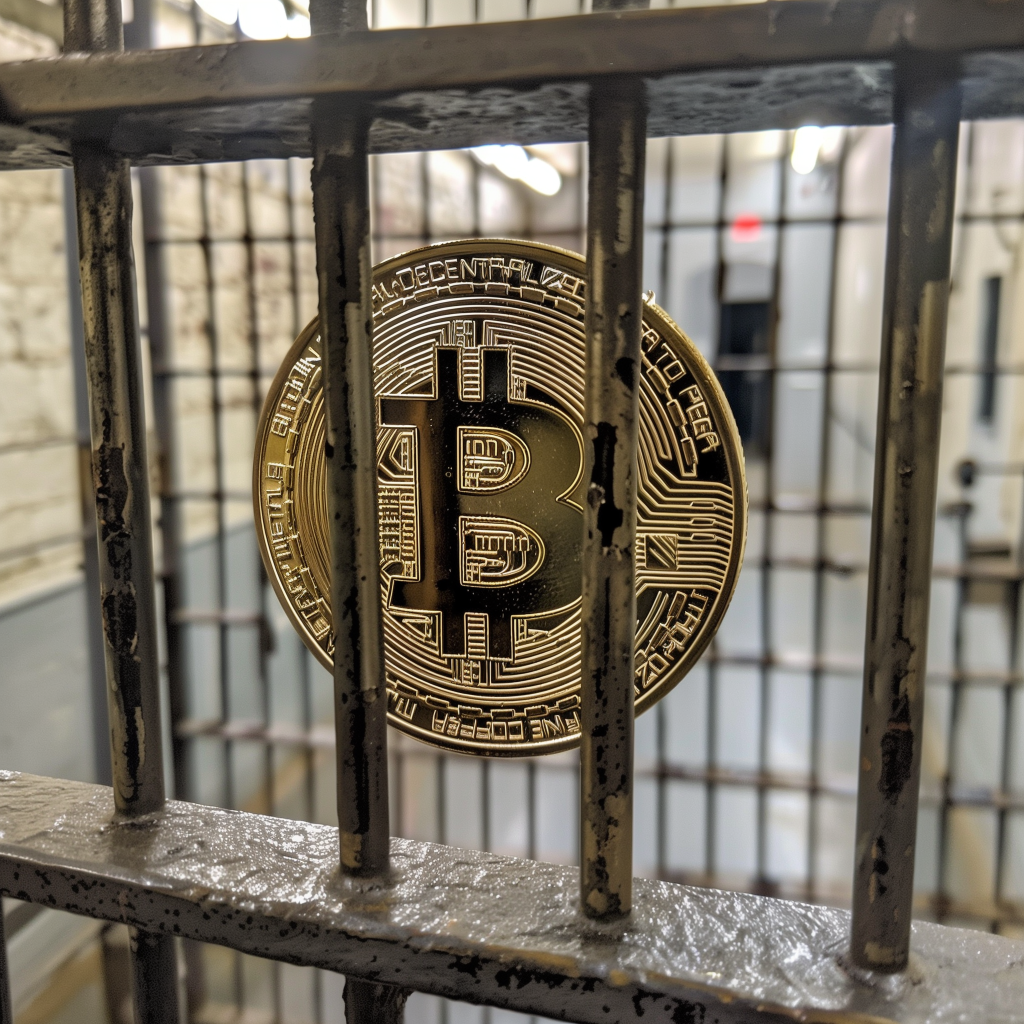
As we navigate through 2024, Bitcoin continues to stand as a pivotal figure in the cryptocurrency landscape. This year is particularly significant due to the SEC’s endorsement of the first US-listed Bitcoin ETFs and the upcoming halving event on April 19, which is set to cut new Bitcoin issuance by 50%. As this halving approaches, Bybit, the world’s third-largest cryptocurrency exchange, has projected that the remaining Bitcoin reserves on centralized exchanges could be depleted within nine months, signaling a sharp turn in market dynamics and availability.
Understanding Bitcoin’s Fixed Supply
Bitcoin is notable for its fixed supply cap of 21 million coins, a deliberate design choice by its creator, Satoshi Nakamoto, that emulates the scarcity of precious resources like gold. This cap is central to Bitcoin’s value proposition, introducing a scarcity that, assuming increasing demand, may drive its value up over time as the supply of new coins diminishes. Each new block mined produces fewer Bitcoins due to the “halving” events that occur every 210,000 blocks—approximately every four years—where the reward for mining a new block is halved. This system of progressively reduced block rewards is designed to mimic the extraction of a finite resource and to slow the rate of Bitcoin creation.
The Depleting Reserves on Central Exchanges
Centralized cryptocurrency exchanges (CEXs) are platforms that facilitate the trading of digital assets like Bitcoin and play a vital role in providing liquidity. They serve as intermediaries between buyers and sellers, offering a secure environment for exchanging cryptocurrencies for fiat currencies or other digital assets. However, recent trends show a significant year-on-year decline in the Bitcoin reserves held by these exchanges, driven by several factors:
- Increased Institutional Holding: As institutional investors continue to acquire and hold Bitcoin, less is available for trading on exchanges. These investors typically hold onto their assets long-term, reducing the circulating supply accessible for everyday trading.
- Growth of Bitcoin as a Treasury Asset: Companies are increasingly holding Bitcoin on their balance sheets as a reserve asset, similar to traditional treasury holdings. This movement, popularized by entities like MicroStrategy, removes significant amounts of Bitcoin from the trading pool.
- Rise in Staking and DeFi: The expansion of decentralized finance (DeFi) and staking mechanisms, especially post-Ethereum’s upgrades, locks up funds that would otherwise be traded on exchanges. This is not limited to Ethereum, as similar mechanisms are available across various blockchain platforms, affecting the liquidity of assets like Bitcoin.

The Role of Institutional Investors
The role of institutional investors has marked a significant shift in the perception and use of Bitcoin in the broader financial market. Beginning in the mid-2010s, these investors started recognizing Bitcoin’s potential as a hedge against inflation and currency devaluation, akin to gold. This comparison stems from Bitcoin’s fixed supply, bolstering its value as a stable store of wealth. However, Bitcoin differs notably in its digital and decentralized nature, which offers enhanced accessibility and the potential for higher returns compared to traditional assets.
The momentum for institutional adoption surged in 2020, when major firms like MicroStrategy, Square, and Tesla began incorporating Bitcoin into their balance sheets. These high-profile endorsements and investments signaled a critical shift in institutional strategy, highlighting not just asset holding, but also the utilization of Bitcoin for substantial potential returns, fostering broader acceptance within financial sectors.
The increasing institutional interest in Bitcoin is reshaping the investment landscape, enhancing the cryptocurrency’s liquidity and maturing its market dynamics. With many of these investors adopting long-term holding strategies, a significant amount of Bitcoin has been withdrawn from circulation, thus contributing to decreasing reserves on exchanges.
The Impact of Long-Term Holders
Long-term holders, commonly known as ‘HODLers,’ are individuals who purchase Bitcoin with the intent to hold it indefinitely, believing strongly in its potential for long-term value appreciation. This ‘HODLing’ strategy stands in stark contrast to that of day traders or short-term investors, who frequently buy and sell based on short-term market fluctuations to secure quick profits. HODLers prefer to endure market volatility without selling, adhering to a philosophy that the long-term valuation trend for cryptocurrencies will be positive. Originating from a casual forum post, HODLing has evolved into a core investment philosophy within the cryptocurrency community, symbolizing a long-term, bullish perspective on the potential of cryptocurrencies as an asset class. The increasing number of participants in this group, along with their steadfast belief, has effectively removed a large portion of Bitcoin’s supply from circulation, intensifying the scarcity of available coins on exchanges.
Miner’s Selling Pressure and Rewards Halving
The Bitcoin halving event profoundly affects Bitcoin mining economics by halving the block reward. This reduction slows the creation of new Bitcoins and can adversely affect miner profitability, particularly if Bitcoin’s market price does not increase proportionally. Miners might hold onto their mined Bitcoins rather than sell them immediately—unless financial pressures like operational costs necessitate sales. Such conservative selling practices historically contract Bitcoin’s market supply, potentially boosting its scarcity and value over time.
Moreover, halving events often increase the cost of mining each Bitcoin since the reduction in rewards does not align with decreases in expenses such as electricity and hardware. This financial strain compels miners, particularly those operating less efficiently, to either scale down or halt their operations, potentially tightening new Bitcoin supply further. Conversely, miners with efficient, cost-effective operations might continue profitably, sustaining a consistent though diminished flow of new Bitcoins into the market.

Potential Consequences of Supply Shortage
The significant reduction in Bitcoin available on exchanges, which has reached a five-year low, carries important implications for the cryptocurrency market, particularly in terms of increasing price volatility. This scarcity may encourage retail investors to pivot towards a long-term holding strategy, as the opportunities to buy Bitcoin at lower prices dwindle. For institutional investors, the limited supply underscores Bitcoin’s value as a stable asset, leading to a strategic shift towards treating Bitcoin as a long-term investment rather than a vehicle for quick profits. This perspective could foster deeper integration into broader asset portfolios as institutions seek to diversify with assets that are not correlated with traditional markets.
As the market adapts to the tighter Bitcoin supply, we are likely to see a shift in investment strategies favoring long-term holding. This trend is supported by the movement of Bitcoin into private wallets, indicating a shift away from exchanges and suggesting that the market is maturing. Bitcoin is increasingly perceived as a viable long-term investment, which could contribute to greater market stability as its supply becomes more predictable and controlled. This evolving market dynamic is poised to reshape investment approaches among both retail and institutional investors, aligning them more closely with traditional asset management practices.
Is This a Realistic Outlook?
As of April 16, Bitcoin reserves on centralized exchanges have fallen to a near three-year low of just 1.94 million BTC. A report from Bybit on April 15 highlights that Bitcoin reserves are depleting quickly across all centralized exchanges. If the current trend continues, with a daily inflow of $500 million to Bitcoin Spot ETFs, about 7,142 bitcoins are expected to be withdrawn from exchanges each day.
However, Dune Analytics has observed a slowdown in weekly inflows to spot Bitcoin ETFs since March. The most recent week saw just over $199 million in net inflows, significantly less than the $2.58 billion recorded at the beginning of March. Still, despite this slowdown, spot Bitcoin ETFs have amassed more than 841,000 BTC, worth approximately $52.9 billion, with over $12.7 billion in net inflows since their launch in January. The growing investor interest in Bitcoin since September 2023 is evident, with Bybit’s February 24 asset allocation report showing that institutions are now allocating an average of 40% of their total assets to BTC, compared to 24% by retail investors.
Additionally, there is an expectation that more institutions will boost their Bitcoin investments as earlier restrictions that limited their participation in new market products recede. Many institutions are currently held back by mandates that restrict investment in newly introduced products.
Conclusion
In summary, Given Bybit’s projection of dwindling Bitcoin reserves on centralized exchanges within the next nine months, we may be poised to witness profound shifts in both market dynamics and asset availability. This scarcity is likely to reinforce Bitcoin’s value as a long-term investment, increasingly akin to traditional safe-haven assets, and could prompt a recalibration of investment strategies towards sustainability and growth. As investors adjust to these new conditions, embracing long-term holdings and diversifying portfolios, Bitcoin’s role in the financial landscape is set to evolve. These developments not only highlight the maturation of the cryptocurrency market but also signal a new era in which Bitcoin is interwoven with broader financial practices.


 My Attorney Is A Robot
Leave a comment