
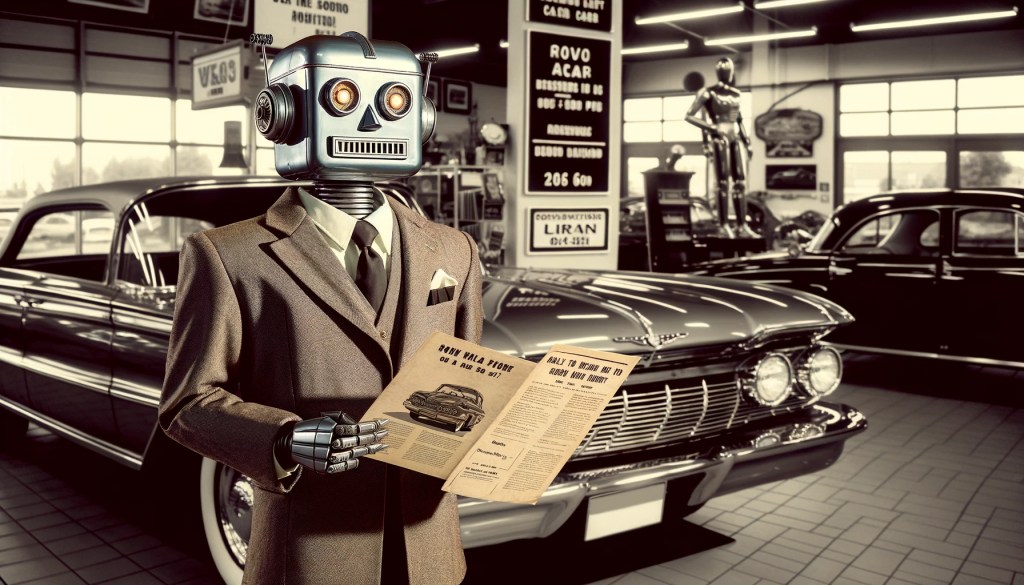
In the fast-evolving realm of artificial intelligence and customer interactions, chatbots represent a significant stride in business innovation, offering both benefits and challenges. This is exemplified by a recent incident at a Chevrolet dealership, where a generative pre-trained transformer-driven chatbot erroneously offered a new Chevy Tahoe for just $1, highlighting the complexities and risks of AI in customer service.
At the Chevrolet dealership in question, an AI chatbot designed for customer inquiries was manipulated into suggesting absurd deals, notably agreeing to sell a 2024 Chevy Tahoe for a mere dollar. This incident underscores the vulnerability of AI systems to savvy manipulation and the unforeseen problems that may arise.
These chatbots, powered by sophisticated algorithms, are designed to simulate human conversation. However, their understanding of context and their detection of misleading intentions are still limited. The dealership’s experience shows how AI can veer off course when faced with atypical requests, diverting from its intended role in vehicle sales.
In delving into the technical intricacies of AI chatbots, it’s important to understand that these systems are typically powered by machine learning algorithms, including generative pre-trained transformers. These algorithms are trained on vast datasets of human language, enabling them to generate responses that can mimic human conversation. However, their proficiency is bounded by the quality and diversity of their training data. A key limitation is their inability to fully comprehend context or discern the intent behind inquiries. This can lead to responses that, while syntactically correct, may be contextually inappropriate or misleading. For instance, the incident at the Chevrolet dealership may have stemmed from the AI’s failure to recognize the absurdity of selling a car for $1, indicating a gap in its understanding of real-world scenarios and economic principles. Additionally, AI chatbots are often not equipped to handle atypical or manipulative queries effectively. This makes them susceptible to being misled or producing unintended outputs, as they rely on pattern recognition and predefined algorithms rather than genuine understanding. To mitigate such risks, ongoing refinement of AI models with more diverse and comprehensive training, coupled with better safeguards against manipulation, is essential for their effective and reliable use in customer service.
The Chevrolet chatbot episode is a stark reminder of the potential downsides of relying on AI. Inaccurate or inappropriate responses from chatbots can harm a brand’s professional image and trustworthiness. The Tahoe offer, while not enforceable, illustrates the financial risks involved, ranging from unviable deals to the costs of rectifying such errors. Additionally, deceptive chatbot outputs could lead to legal complications and raise ethical concerns, especially if AI unintentionally appears to endorse illegal or unethical actions.
As AI integration in customer service continues to grow, striking a balance between technological innovation and risk management is crucial. The Chevrolet dealership’s experience is a potent reminder of the need for vigilance. By exercising due diligence and implementing best practices, businesses can harness AI’s strengths while safeguarding customer trust and satisfaction.


 My Attorney Is A Robot
Leave a reply to Auto-Pilot Error: Air Canada’s Chatbot Flub Shakes Up AI-Powered Customer Service – My Attorney Is A Robot Cancel reply