
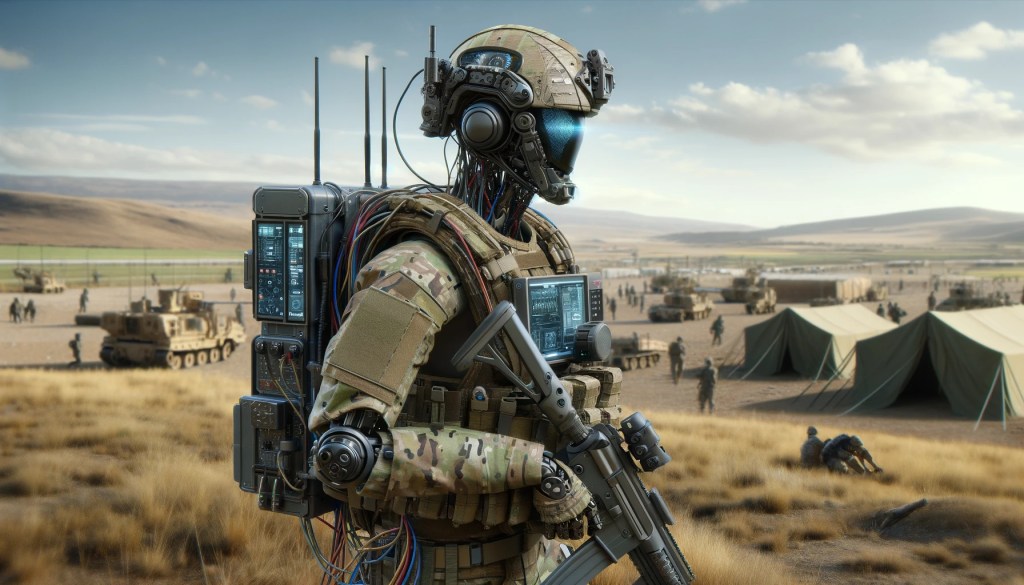
Project Maven, a groundbreaking initiative by the U.S. Department of Defense, marks a significant advancement in integrating artificial intelligence into military operations. Its primary aim is to employ machine learning to assist analysts in efficiently processing and interpreting large datasets, thereby accelerating operations, enhancing maritime domain awareness, and improving target management. However, despite its advancements, Project Maven has been steeped in controversy since its inception. The application of advanced AI in military settings has led to widespread legal and ethical debates, necessitating the creation of comprehensive guidelines for the responsible use of AI in defense activities. Therefore, as it continues to develop, Project Maven is poised to significantly influence the intersection of ethics, law, and AI in military applications.
Project Maven’s Origins and Evolution
Launched in April 2017 by the Department of Defense (DoD), Project Maven, officially known as the Algorithmic Warfare Cross-Function Team, represents a significant stride in the U.S. military’s integration of advanced technologies. Initiated by then-Deputy Defense Secretary Bob Work, the project focuses on utilizing big data, artificial intelligence, and machine learning to enhance the DoD’s operational capabilities. A key aspect of Project Maven is its emphasis on computer vision – a branch of machine learning that autonomously identifies objects of interest in both moving and still imagery using biologically inspired neural networks. This technology is pivotal in managing the overwhelming influx of data, notably the millions of hours of video, thus aiding military and civilian analysts in counterinsurgency and counterterrorism operations.
The initial phase of Project Maven focused on creating and integrating advanced computer-vision algorithms. These algorithms were designed to transform a substantial amount of full-motion video data into usable intelligence and reliable insights for decision-making. Given the project’s scale and complexity, the Department of Defense collaborated with private sector companies, academic institutions, and national laboratories. These partnerships aimed to enhance the development and deployment of these AI-driven algorithms efficiently.
As of late 2023, the project has evolved into an official program of record under the National Geospatial-Intelligence Agency (NGA), demonstrating the DoD’s ongoing commitment to leveraging cutting-edge technologies. Expanding its focus, Project Maven is now also exploring the potential of large language models and advanced data labeling techniques to further refine its AI-driven analytical capabilities. This transition marks a significant step in the DoD’s journey to harness the power of generative AI and machine learning for national security and defense.
Google’s Moral Dilemma
Amidst the project’s initial successes, a significant ethical controversy emerged in 2018 concerning the DoD’s collaborative efforts. In April of that year, Google’s participation became public, igniting internal conflict. Over 3,000 employees petitioned CEO Sundar Pichai to withdraw from the project and to adopt a stance against developing warfare technology. This internal protest highlighted deep concerns among Google staff about the potential military application of their AI work, raising questions about the moral implications of using AI in warfare and the potential impact on Google’s reputation and talent recruitment.
The internal conflict at Google highlighted the broader ethical dilemmas and responsibilities faced by tech companies when their innovations intersect with military and defense applications. It also brought to the fore the challenges of balancing corporate social responsibility with business contracts in sensitive areas like defense. Google eventually decided not to renew its contract for Project Maven, reflecting the complexities and ethical considerations involved in such partnerships.
The DoD, in response to these and other concerns, has been working on developing detailed AI ethics guidelines for tech contractors. These guidelines aim to ensure that companies adhere to ethical principles during the planning, development, and deployment of AI technologies, especially those used in defense. The guidelines cover a wide range of considerations, including identifying potential users and harms of the technology and how to mitigate these harms. However, some critics question whether these guidelines can lead to meaningful reform, especially when it comes to controversial technologies like lethal autonomous weapons.
Legal and Ethical Challenges
With its focus on integrating artificial intelligence into military operations, particularly through advanced computer-vision algorithms, Project Maven faces numerous complex legal challenges. These challenges are primarily centered around compliance with international humanitarian law (IHL), which governs the conduct of warfare and aims to limit its effects. The application of AI in military contexts, such as in Project Maven, raises questions about adherence to the principles of distinction, proportionality, and necessity, which are fundamental to IHL.
One of the core legal issues is the unpredictable nature of AI, especially when driven by machine learning techniques. Unlike traditional rule-based AI, machine learning algorithms ‘learn’ from vast datasets and can develop behaviors or actions that are not explicitly programmed, leading to the ‘black box’ dilemma, where AI decisions are not fully explainable or justifiable. This unpredictability challenges the principle of distinction, which requires parties in a conflict to distinguish between combatants and non-combatants, and the principle of proportionality, which dictates that the harm caused to civilians must be proportional to the military advantage gained.
Furthermore, AI’s ability to process data at a speed and scale beyond human capabilities raises concerns about effective human oversight and judgment, which is crucial for compliance with IHL. The use of AI in decision support systems, for instance, may lead to automation bias, where human operators, overwhelmed by the volume and speed of AI-processed data, may uncritically accept AI recommendations. This scenario could compromise the principle of necessity, which mandates that any measure of warfare must be strictly necessary for achieving a legitimate military objective.
Given these complexities, the integration of AI in military operations, as exemplified by Project Maven, demands careful consideration of legal and ethical frameworks to ensure that the use of AI is consistent with international law and the principles of humanitarian conduct in warfare. This includes maintaining effective human control and judgment in the deployment of AI systems in military settings.
The challenges faced by Project Maven illustrate the broader legal and ethical dilemmas posed by the military use of AI, necessitating ongoing dialogue and the development of international norms and standards to guide the responsible use of AI in armed conflict.
Conclusion
As Project Maven continues to evolve, it is poised to significantly influence the intersection of ethics, law, and AI in military applications. The project’s journey underscores the necessity for ongoing dialogue and the development of international norms and standards to guide the responsible use of AI in armed conflict, ensuring that its deployment aligns with international law and humanitarian principles. The challenges faced by Project Maven reflect the broader dilemmas in the military use of AI, emphasizing the importance of maintaining a human-centered approach in the development and application of these advanced technologies.


 My Attorney Is A Robot
Leave a reply to Anuran & Sayoni Cancel reply