

Figure AI Inc., a robotics startup with a visionary goal of developing of the world’s first commercially viable autonomous humanoid robot, has caught the attention of major tech giants like Amazon, Microsoft, and Nvidia, who have collectively poured an impressive $675 million into the venture.

Figure AI and “Figure 01”
At the center of this investment tsunami is “Figure 01,” a groundbreaking humanoid robot designed to integrate into various industries by performing tasks that are either too dangerous or unsuitable for humans. Its capabilities are extended from simple tasks like brewing coffee to intricate functions within manufacturing environments, showing a potential to alleviate labor shortages and revolutionize efficiency in production and service sectors.
A distinctive feature of Figure 01 is its ability to autonomously learn by observing human actions. This was impressively demonstrated when the robot operated a coffee machine after simply watching humans perform the task, illustrating its capability to learn a broad spectrum of activities without the need for task-specific programming. Such adaptability signals a move towards robotic solutions that are more flexible and customizable, suitable for various operational requirements in different settings.
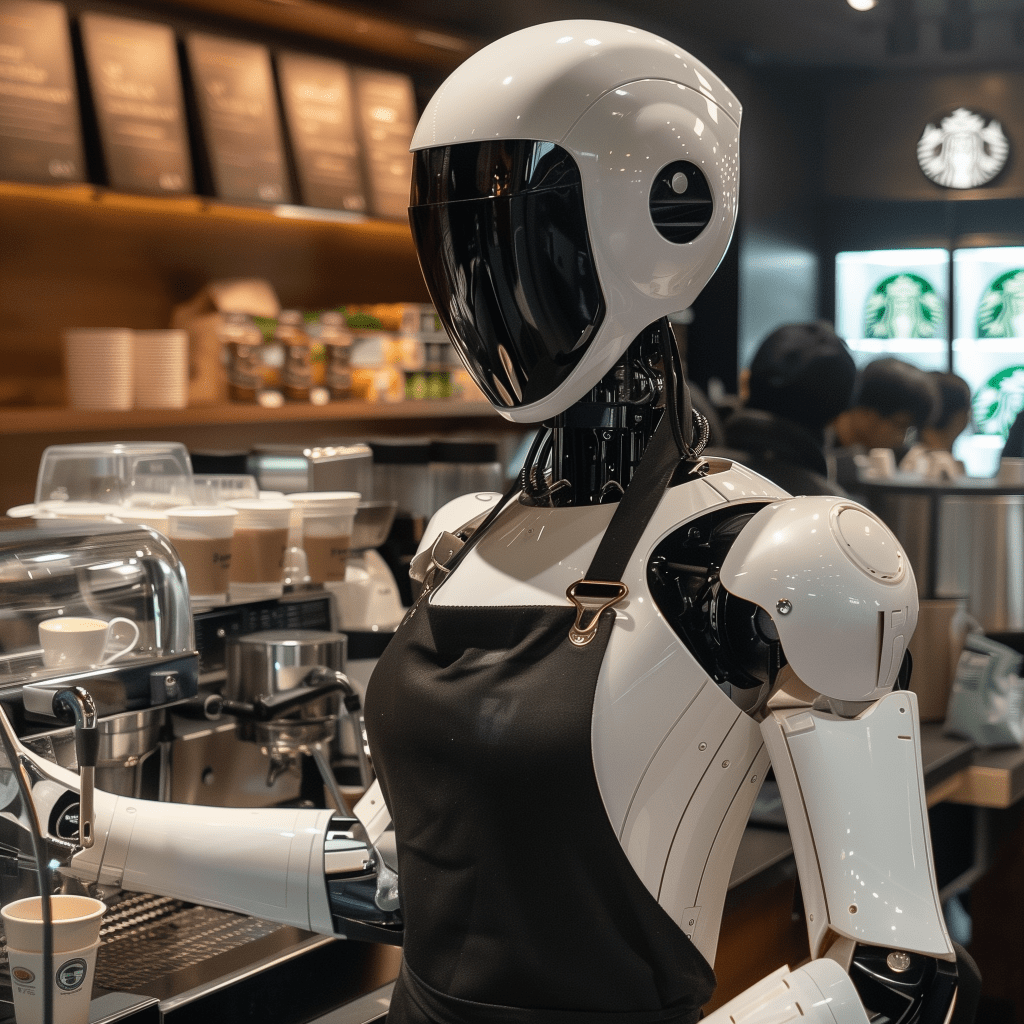
Additionally, Figure 01 is designed to closely mimic human behavior and interactions, enabling it to integrate smoothly into human-centric work environments. This strategy not only expands the range of tasks robots can perform but also improves their ability to execute complex activities with a degree of dexterity and adaptability that was previously exclusive to humans.
The deployment of Figure 01 in BMW’s South Carolina plant serves as a prime example of its practical application. Here, the robot is under evaluation for tasks like moving bins and boxes in the BMW body shop, marking a pivotal step towards automating physically demanding logistical operations.
Investment Boom
The emergence of Figure AI has sparked considerable interest among heavyweight investors within the technology sector, propelling the company to the forefront of securing a significant capital infusion. It is currently in discussions to secure around $675 million in a funding round, which would position its pre-money valuation at approximately $2 billion. Microsoft Corp. is leading this financial charge with a proposed investment of $95 million. Notably, OpenAI, which previously considered acquiring Figure AI, is contemplating a $5 million investment. Contributions of $50 million each are expected from Nvidia and an Amazon.com Inc.-affiliated fund. Furthermore, Jeff Bezos, through Explore Investments LLC, is injecting a notable $100 million into the venture.

Other AI Robotics Projects
While Figure AI is making headlines with its groundbreaking work, it’s part of a broader movement that’s pushing the boundaries of AI-powered robotics. The field is bustling with projects that aim to seamlessly integrate artificial intelligence with robotic capabilities, enhancing efficiency and versatility across various sectors.
For instance, early in 2023, 1X Technologies AS made waves by securing $100 million to bring its visionary androids to life. EVE, their wheeled creation, is engineered to collaborate with humans in diverse environments such as logistics and retail, showcasing a partnership between technology and practicality. On the other hand, NEO represents a leap towards more personal assistance as a bipedal humanoid. Designed for an array of general and domestic tasks, NEO embodies the next step in home automation, promising an era of supportive, everyday companions.
In May of the same year, Sanctuary AI introduced the world to Phoenix, a humanoid robot standing 5’7″ tall and capable of lifting up to 55 lbs. Phoenix is not just a marvel of engineering but a testament to versatility, designed to operate across multiple industries. Equipped with robotic hands that offer 20 degrees of freedom, Phoenix can perform intricate tasks, all while moving at a pace of 3 miles per hour. At its core is Carbon, a cutting-edge AI control system that blends modern AI technologies for an execution of tasks that feels surprisingly human, from logical reasoning to goal-oriented actions.

The journey of Tesla’s Optimus project further illustrates the rapid advancements in this field. Evolving from an initial concept to the more sophisticated Optimus Gen-1 and Gen-2 models, Tesla showcases remarkable progress in locomotion and AI interaction. Despite early challenges, such as limited actuator availability, Tesla’s commitment to innovation led to the development of custom actuators, paving the way for mass production. The Optimus Gen 2, in particular, stands out with its enhanced mobility, including a flexible neck, a walking speed that mirrors human pacing more closely, and hands designed for delicate tasks. These features not only represent significant technological strides but also highlight the symbiotic relationship between AI and mechanical design, setting new standards for versatile robotic applications.
Future Aspirations
Figure AI is ambitiously aiming to distinguish itself from other robotics ventures through a comprehensive and progressive approach. The company has outlined a phased strategy that begins with creating a fully functional electromechanical humanoid, advancing to human-like manipulation capabilities, and culminating in the integration of these robots into the workforce.
Figure AI’s vision extends beyond merely augmenting the human workforce; it seeks to fundamentally transform how work is conducted across industries, leveraging the human-like form factor of its robots to navigate and operate within environments designed for humans. This approach is expected to enable the robots to perform a wide range of tasks, from basic physical labor to more complex, nuanced activities that require fine motor skills and decision-making capabilities.
Figure AI’s aspirations align with broader trends in the robotics and AI industries, where the focus is increasingly on developing technologies that can seamlessly integrate into human-centric environments. By prioritizing versatility, adaptability, and the ability to perform general tasks, Figure AI is positioning itself at the forefront of a movement that could redefine the future of work, driving efficiency and innovation across industries while addressing pressing challenges such as labor shortages and workplace safety.
Challenges and Considerations
As Figure AI advances in developing autonomous humanoid robots, it navigates a complex landscape of technical and ethical challenges that are intrinsic to integrating these technologies into diverse work environments. One of the primary technical challenges involves creating robots that can autonomously learn and perform tasks across various industries without explicit programming for each new task. This approach necessitates advancements in AI and machine learning that can interpret complex environments and adapt to them in real-time, a significant technical hurdle given the variability of real-world settings.
Another critical challenge is the societal and ethical implications of deploying humanoid robots on a large scale. There is a growing discourse on how such technologies could affect employment, with concerns about displacing workers, especially in roles deemed unsafe, tedious, or undesirable. However, proponents argue that these robots could alleviate labor shortages and allow humans to focus on more skilled and creative tasks.

Moreover, as humanoid robots become more integrated into the workforce, questions arise about their role and rights within society. Discussions around AI ethics, including the treatment of autonomous entities and the potential need for regulatory frameworks, are becoming increasingly pertinent. The rapid advancement and deployment of humanoid robots, as seen with Figure AI’s developments, underscore the need for ongoing dialogue among technologists, ethicists, policymakers, and the public to navigate these uncharted waters.
Conclusion
In conclusion, Figure AI Inc.’s journey from an ambitious startup to a frontrunner in the development of autonomous humanoid robots, exemplified by “Figure 01,” represents a significant leap forward in the field of robotics. With substantial backing from tech behemoths such as Amazon, Microsoft, and Nvidia, Figure AI is poised to redefine the boundaries of what robots can achieve in human-centric work environments. The company’s innovative approach, focusing on robots that can autonomously learn and adapt to a variety of tasks, sets a new standard for versatility and efficiency in robotics. By integrating these advanced machines into industries plagued by labor shortages or those involving dangerous tasks for humans, Figure AI not only aims to enhance productivity and safety but also to revolutionize the very nature of work across sectors.
This venture, alongside other pioneering projects in the field, heralds a future where robots and humans collaborate more closely, with machines handling an expanding range of activities. This shift promises to unlock new levels of efficiency and innovation, while also presenting challenges and ethical considerations that society must thoughtfully address. As robots become more capable and integrated into our daily lives, the conversation around their impact on employment, societal roles, and ethical treatment will intensify, necessitating careful deliberation and policy development to ensure a future that benefits all.
Looking ahead, Figure AI’s endeavors, along with those of its peers in the robotics domain, pave the way for an era where autonomous humanoid robots are an integral part of the workforce. The company’s progress and vision invite us to reimagine the possibilities of human-robot collaboration, where machines not only augment human capabilities but also contribute to solving complex challenges facing various industries. As we stand on the brink of this new frontier, the collective efforts of innovators, investors, and policymakers will be crucial in shaping a future where technology enhances human work and creativity, rather than displacing it. The journey of Figure AI and “Figure 01” is a vivid illustration of the potential that lies in harnessing the power of robotics and AI to create a more efficient, safe, and innovative world.


 My Attorney Is A Robot
Leave a reply to gwengrant Cancel reply