
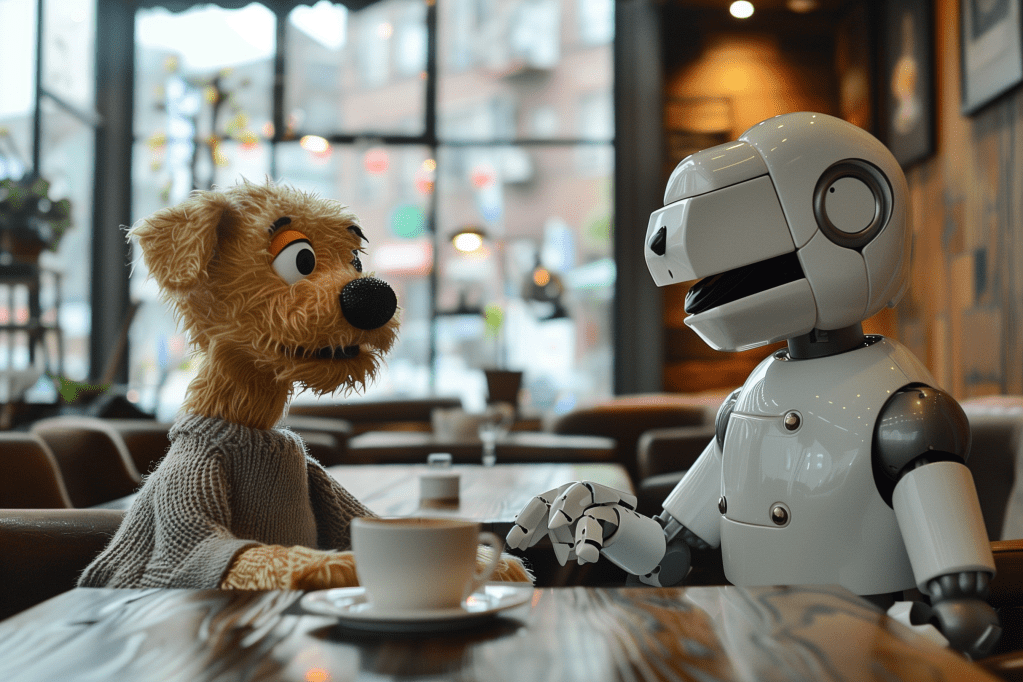
The rapid advancement in artificial intelligence (AI) is set to transform our understanding and interaction with the animal kingdom through digital bioacoustics. This leap forward is fueled by sophisticated AI technologies that can decode and interpret the complex vocalizations and behaviors of animals, including household pets like dogs and cats. By using AI to decode these subtle communications and translating them into a format understandable to humans, we are moving towards the development of an animal ChatGPT. This technology promises to enhance our communication with animals, paving the way for deeper connections and understanding between humans and their animal companions.

Facilitating Communication with Animals
Digital bioacoustics is a field that combines biology, ecology, and technology to study the sounds produced by living organisms. It focuses on recording, analyzing, and interpreting the sounds of animals and other biological entities to gain insights into their behavior, ecology, physiology, and interactions within their environment. This interdisciplinary approach leverages advancements in digital audio recording, signal processing, and data analysis techniques to explore the acoustic dimension of wildlife and ecosystems.
The integration of AI technology into digital bioacoustics represents a significant advancement in the field, enhancing the ability to analyze complex acoustic data at scales and speeds that were previously unattainable. AI, particularly through machine learning and deep learning algorithms, automates and refines the process of identifying, classifying, and interpreting the sounds of various organisms.
With the enhanced data produced through the use of AI, researchers can now utilize natural language processing to sift through the collected information to identify patterns and nuances in animal communication, from honeybees’ dances to bats’ echolocation signals. This scientific approach allows for a deeper understanding of animal languages and behaviors.
Pioneering Initiatives in AI Bioacoustics Research
The Earth Species Project (ESP) stands at the vanguard of integrating AI into the bioacoustics field to analyze and interpret the complex communication systems of various animal species. ESP’s approach is multifaceted, using the latest in AI and machine learning technologies to analyze animal vocalizations, movements, environmental contexts, and even their emotional states. Among its innovative efforts are generative vocalization experiments. In these experiments, researchers use deep learning models, such as Generative Adversarial Networks (GANs) or Variational Autoencoders (VAEs), to create new animal sounds. These sounds are then tested in interactive playback experiments to study animal responses.
Another cornerstone of ESP’s methodology is the use of geometric language representations. In 2013, a groundbreaking machine learning technique emerged that can map an entire language’s geometric structure. This “latent space” is a multi-dimensional space where each point (or “star”) represents a word, and the spatial relationships between points encode semantic meanings. This technique has enabled the translation of human languages without the need for dictionaries or direct translations, by matching their latent geometric representations. ESP aims to apply similar methodologies to animal communication, translating non-human languages into forms that humans can understand, even when there are no direct equivalents in human languages.
Similarly, the Cetacean Translation Initiative (CETI) employs a blend of advanced AI, innovative robotics, and bioinspired technologies to decode and understand the complex communication system of whales. This includes the deployment of aerial drones equipped with high-tech suction-cup tags and underwater microphones to capture comprehensive acoustic data. The information collected from these devices is then used to construct large-scale datasets that train AI models to interpret whale communication within its behavioral context.

How AI May Enhance The Understanding of Cats and Dogs
While AI-driven projects like ESP and CETI are on the verge of enabling humans to interact with various species in previously unimaginable ways, there are also efforts focusing on leveraging this technology to gain insights into the animal companions we have closer to home.
Take, for instance, the work of Professor Daniel Mills at the University of Lincoln, who is pioneering the application of AI in interpreting the subtle signals conveyed by cats. By examining cues such as the positioning of the ears, AI technologies are beginning to decipher the complex language of feline expressions, shedding light on their emotions and intentions. This innovation promises to significantly broaden our comprehension of how cats communicate, potentially solving the enigma of their numerous expressions.
Parallel advancements are also being made in understanding canine communication. Con Slobodchikoff, a renowned author and researcher in the field of animal languages, is crafting an AI model capable of translating dogs’ facial expressions and vocalizations into terms we can comprehend. Slobodchikoff’s work, which he elaborates on in his book “Chasing Doctor Dolittle: Learning the Language of Animals,” posits that animals, much like humans, might have rich inner worlds filled with thoughts, aspirations, and perhaps dreams.
Ethical and Legal Considerations
The use of AI in communicating with animals brings forth a range of ethical and legal implications, particularly concerning animal welfare and the integrity of their natural behaviors.
The ethical implications of integrating AI technologies with animal interactions involve a range of considerations that prioritize the welfare and integrity of animal life. At the forefront of these considerations are welfare concerns, emphasizing the necessity to prevent physical and psychological harm to animals resulting from their interaction with AI devices. Such harm could manifest as injuries directly caused by the devices or stress and anxiety from unnatural interactions, underscoring the importance of continuous welfare assessments and the adherence to ethical guidelines aimed at minimizing potential distress.
Additionally, the impact of AI on behavioral integrity raises alarm; the use of AI-mediated communication might inadvertently alter animal behaviors—disrupting natural social structures, mating patterns, and other critical behaviors—thus potentially harming their survival and well-being. Ensuring that AI technologies do not lead animals to deviate from their innate behaviors is crucial for their social integration and ecological roles. Furthermore, the issue of consent and autonomy presents a unique ethical challenge, as animals are incapable of providing informed consent to participate in AI-related experiments or interactions. This limitation prompts a reevaluation of how to ethically engage with animals in a manner that respects their autonomy and natural behaviors, recognizing their right to opt out of AI-mediated interactions.
Legally, the use of AI in animal communication necessitates the development of specific regulations to ensure that such technologies are utilized responsibly and ethically. This includes the establishment of standards that guide the design, testing, and implementation of AI systems interacting with animals, complemented by oversight from pertinent authorities to uphold ethical and welfare standards. Furthermore, the deployment of AI in this field prompts significant questions regarding liability, particularly concerning who bears responsibility if animals are harmed or their welfare is compromised—be it the technology developers, the researchers, or the animal owners. Clear legal frameworks are imperative to address these complex issues. Additionally, these frameworks should encapsulate the ethical considerations of animal and AI research, mandating adherence to established ethical guidelines, such as the 3Rs—replacement, reduction, and refinement.
Conclusion
In conclusion, the integration of AI into digital bioacoustics and animal communication research represents a transformative leap towards understanding and interacting with the animal kingdom on an unprecedented level. By harnessing the power of AI, initiatives like the Earth Species Project and the Cetacean Translation Initiative are decoding complex animal communications, bridging the gap between species through technological innovation. The potential to extend this understanding to our beloved pets, like cats and dogs, offers a glimpse into a future where the bonds between humans and animals are strengthened by deeper empathy and comprehension. However, as we navigate this promising frontier, it is imperative to tread thoughtfully, balancing our curiosity and desire for connection with a steadfast commitment to the ethical treatment and welfare of animals. By ensuring that these technological advancements are guided by robust ethical standards and legal frameworks, we can aspire to a future where AI not only deepens our understanding of animals but also enriches our shared coexistence, fostering a world where humans and animals communicate more effectively, with mutual respect and understanding.


 My Attorney Is A Robot
Leave a comment