

The fast-food industry, built around quick service and convenience, is beginning to adopt artificial intelligence (AI) in order to boost operational efficiency and enhance customer service. Technologies like automated service kiosks, digital menu boards, chatbots, and continuous monitoring devices are rapidly being employed to help franchises remain competitive in a swiftly changing digital environment that values speed, accuracy, and personalization. While these advancements promise a future where fast food services are more closely aligned with individual preferences, optimize supply chain efficiency, and uphold food safety standards, they also raise significant concerns about job displacement, privacy, and the potential establishment of unfair productivity standards.
AI Technologies in Fast Food
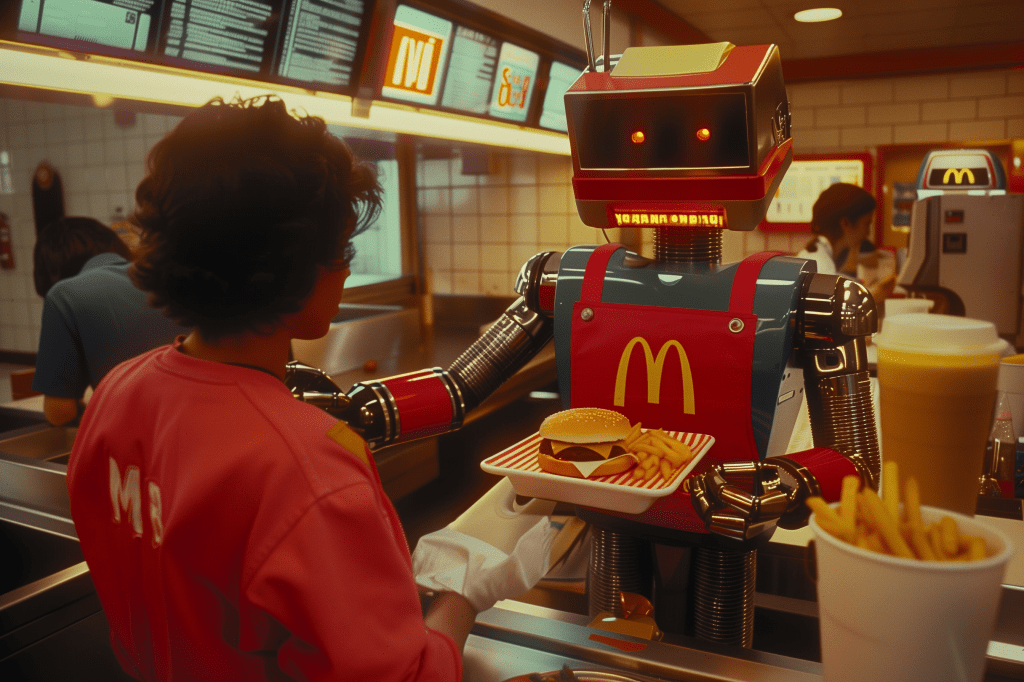
As fast-food franchises strive to remain competitive in a rapidly evolving economy, the adoption of AI-powered technologies is accelerating. Among these, automated service kiosks have become one of the most widely used tools across the industry. These kiosks, featuring interactive tablets or touchscreen computers, enable customers to access information and services autonomously, reducing the need for direct human interaction. By integrating these machines, leading brands such as Taco Bell, Wendy’s, and McDonald’s have begun to revamp their customer service strategies, aiming to streamline transactions and enrich the customer experience.
For example, McDonald’s digital menu boards have notably decreased wait times, minimized order errors, and allowed customers to peruse the menu at their leisure, addressing the industry-wide challenge of losing customers deterred by long lines. This point is underscored by a 2023 Retail Customer Experience survey, which revealed that 82% of consumers are put off by lengthy queues.
Moreover, McDonald’s implementation of Dynamic Yield’s machine learning technology enables real-time adaptation of its menu displays based on various factors, such as time of day, restaurant traffic, and item popularity. This adaptability not only streamlines the ordering process but also personalizes the customer experience by recommending items likely to resonate with the individual, thereby enhancing satisfaction and boosting sales.
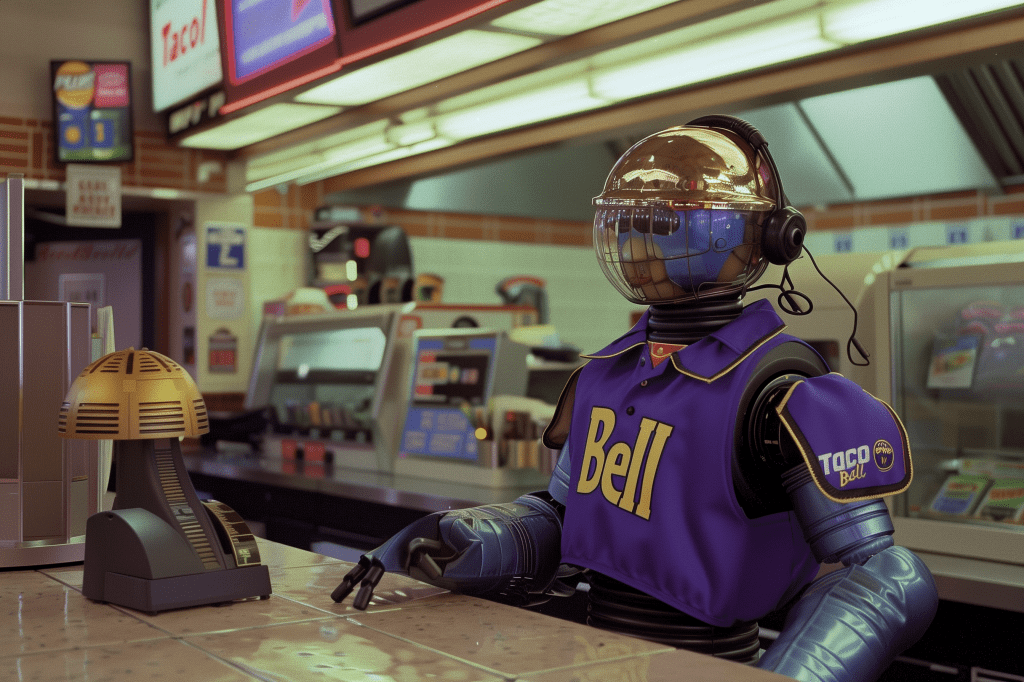
Taco Bell, on the other hand, has taken the enhancement of customer experience a step further by integrating an AI-driven chatbot named TacoBot into its ordering process. Utilizing Facebook’s AI technology, TacoBot functions as digital server, allowing customers to place order within the messaging platform Slack. The chatbot can facilitate both group and individual orders using natural language processing technology, enabling it to understand various ordering styles and track an order accurately. Consequently, a customer can order a taco and then specify “no cheese” in a subsequent message, and TacoBot will comprehend that the cheese should be omitted from the previously ordered taco.
TacoBot also features a user-friendly interface that mirrors the tone and humor associated with Taco Bell’s brand. This means it can interact with users in a witty manner, offering humorous responses and personalized recommendations. For example, if a user mentions being drunk, TacoBot is programmed to suggest adding a cup of water to their order, demonstrating its ability to handle a variety of user inputs in a playful yet functional way.
Beyond enhancing customer engagement, the adoption of AI technology in the industry is also aimed at improving operations and sales. For example, as reported by Forbes, numerous Taco Bell, KFC, and Dairy Queen locations have started using a system called “Riley”, developed by the surveillance company Hoptix, to monitor and analyze employee interactions with customers. Utilizing streams of video and audio collected throughout a shift, Riley analyzes the data, including employees’ conversations with customers, to ascertain whether and how frequently workers attempt to upsell or upsize a customer, or encourage customers to join a loyalty program. Employees who frequently make suggestions that lead to increased sales are rewarded with cash bonuses determined by a scorecard produced by Hoptix’s AI system.
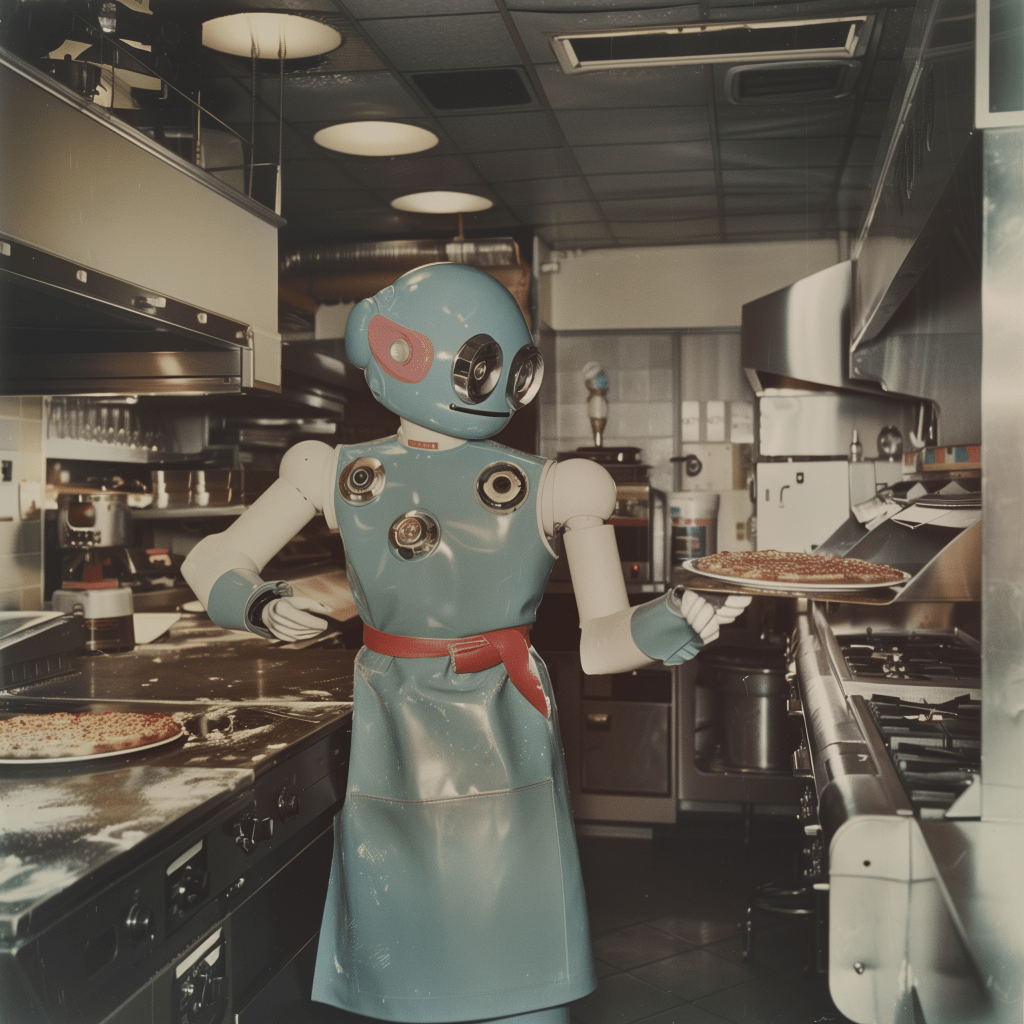
In a similar initiative, Domino’s DOM Pizza Checker employs advanced machine learning, artificial intelligence, and sensor technology to oversee cooking operations. Positioned within the kitchen, this AI-enabled tool captures and analyzes images of pizzas to ensure quality. For example, DOM can ascertain the pizza type, assess topping distribution, and detect incorrect toppings before a pizza leaves for delivery, thereby mitigating complaints related to quality and visual appeal. When an issue is identified, the system alerts the manager via a visual pop-up and an audible signal, and displays the specific problem. Additionally, a thumbnail image of the pizza is uploaded to Domino’s tracker, enabling customers to view their order. All collected data is then transmitted to Domino’s headquarters, which aids in evaluating each store’s performance, optimizing training resource allocation, and reducing the necessity for audits.
AI Innovations on the Horizon
Although not yet widespread, other AI-powered technologies are poised to enter the fast-food industry soon. Chains such as Popeyes, Taco Bell, Panera Bread, and Chipotle are already experimenting with AI-powered voice bots to take orders at drive-thrus and over the phone, aiming to reduce labor costs and increase sales. These automated voice bots could enhance the customer experience by using license plate recognition to access customer profiles and display past preferences. Moreover, future interactions might evolve from simple voice commands to engaging conversations with bots using celebrity or sports personalities’ voices, adding a novel touch to the drive-thru experience.
Drive-thru operations could also be transformed by the deployment of automated menu boards that leverage AI to suggest timely changes and upselling opportunities, such as recommending a cold milkshake on a hot day. These AI and advanced machine learning systems, which utilize data points like weather, current restaurant traffic, and popular menu items, can analyze extensive and real-time data. This capability enables operators to swiftly test and refine promotions, combos, and pricing strategies, effectively promoting and upselling their most profitable and appealing options. Moreover, the addition of engaging, dynamic content, including videos, can captivate customers’ attention and significantly enhance sales by improving the overall experience.
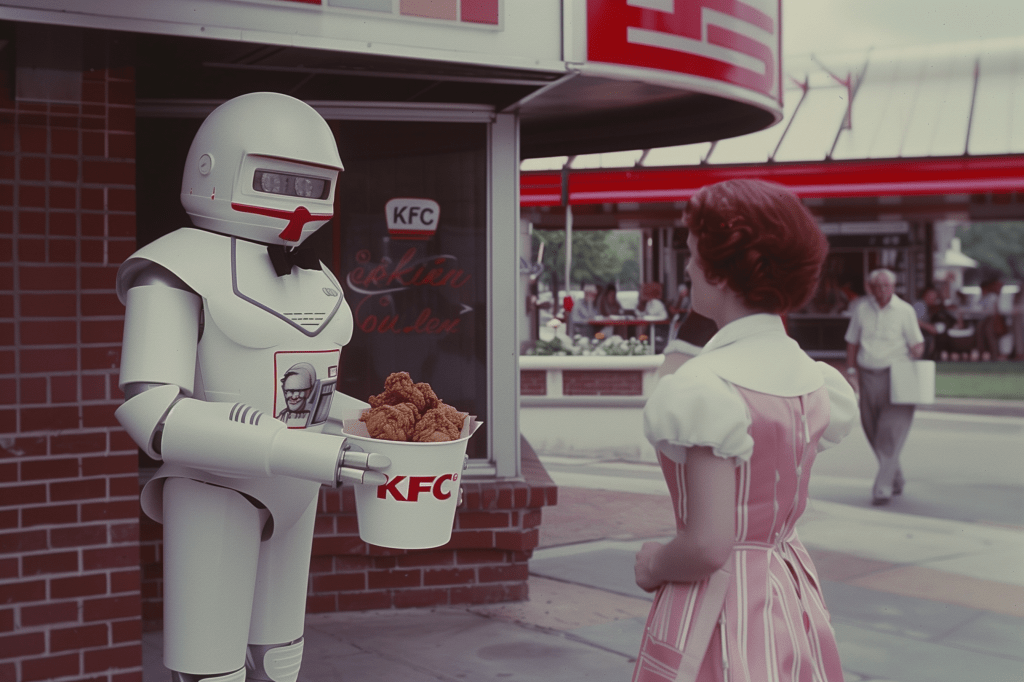
As early as 2017, KFC in Beijing started offering recommendations to customers based on their perceived gender, age, and mood, using facial recognition technology integrated into a menu screen. In 2019, McDonald’s initiated tests with automated menu boards following its acquisition of Dynamic Yield Ltd., a company known for its expertise in personalization and decision logic technology. Moreover, Wendy’s, recognized for its commitment to technological advancement, announced last week its plans to implement AI-enabled menu boards across all U.S. locations, which will facilitate AI-driven modifications and suggestive selling.
Last but not least, some fast-food restaurants are considering the adoption of AI-influenced dynamic pricing strategies to attract new customers and mitigate labor shortages amid high turnover rates. This approach to pricing, which adjusts rates to reflect fluctuating market conditions, is akin to strategies used by event ticket sellers and ride-hailing services. It involves varying the price of products or services based on demand, typically charging more during peak times. However, rather than raising prices during busy periods, restaurants may opt to reduce the cost of certain items during slower periods or offer discounts during promotional events like happy hours and early bird specials.
Concerns and Drawbacks
While AI advancements in the fast food industry hold the promise of a more personalized and efficient future, they also represent a double-edged sword, with potential drawbacks alongside the benefits.
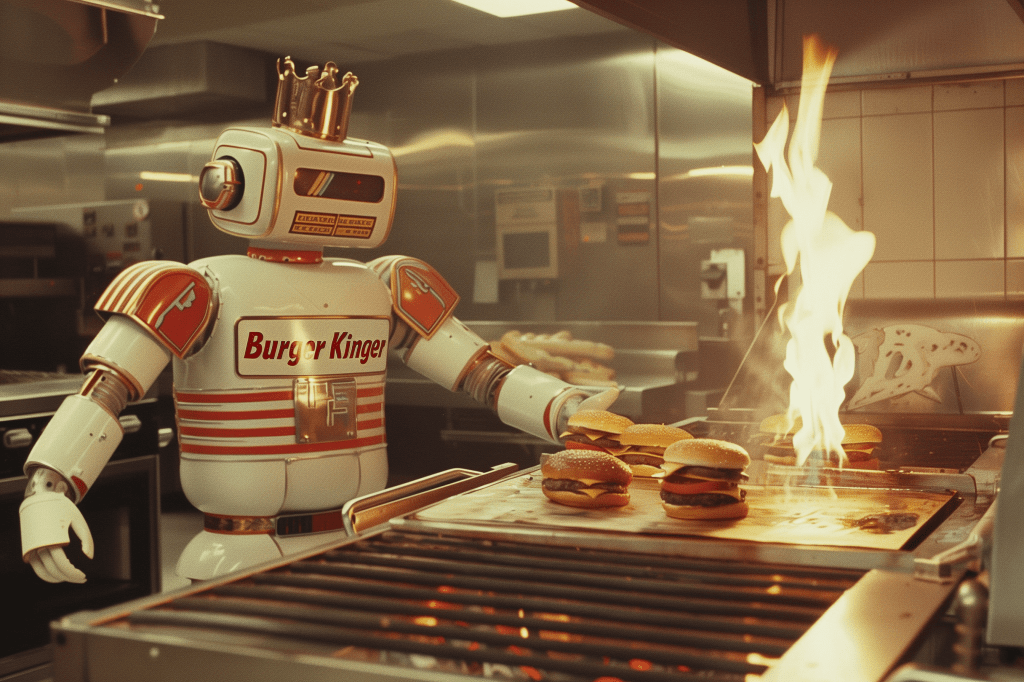
Some reports indicate that a significant number of restaurant jobs might be automated in the future, prompting concern about employment prospects in the sector. For example, numerous emerging technologies are poised for broader deployment. Miso Robotics has developed a robot chef named Flippy, which is capable of flipping burgers more efficiently than humans and is already in use by establishments such as White Castle, CaliBurger, Buffalo Wild Wings, Arby’s, and Sonic. Meanwhile, Starbucks has invested millions in AI-powered espresso machines that operate faster than human baristas, with plans for further investments.
Delivery drivers might not be immune to these changes either. Innovations such as Starship Technologies fleet of autonomous ground vehicles, already deployed for grocery delivery in the UK and the US, demonstrate this trend. These vehicles are equipped with ten cameras, GPS, inertial measurement units, microphones, and speakers for interacting with customers, as well as LIDAR for comprehensive 360-degree navigation. With this technology, they can skillfully navigate around obstacles and pedestrians to reach their destinations
Furthermore, the use of technologies like Riley from Hoptix and DOM from Domino’s highlights AI’s potential to establish new standards in workplace expectations, possibly enforcing data-driven productivity metrics that might overshadow considerations for individual well-being and work-life balance. Critics contend that such intensive monitoring can foster a stressful work environment, diminish job satisfaction, and potentially lead to job displacement. Additionally, there is concern that the data these technologies gather could be misused or misinterpreted, resulting in unfair performance evaluations and adversely impacting employees’ career trajectories.
Conclusion
In conclusion, the fast-food industry’s rapid integration of artificial intelligence marks a transformative era aimed at enhancing efficiency, personalization, and customer engagement. With the deployment of automated kiosks, intelligent digital menus, and AI-driven chatbots, brands like Taco Bell, Wendy’s, and McDonald’s are setting new benchmarks in service delivery and operational excellence. However, as these technologies streamline processes and tailor experiences to individual preferences, they also introduce critical challenges related to workforce dynamics, privacy concerns, and the ethical use of data. As the sector evolves, it will be imperative for stakeholders to balance the benefits of AI with a commitment to addressing these issues, ensuring that technological advancements contribute positively to the industry’s future and society at large. The ongoing adaptation of AI in fast food reflects not only a pursuit of innovation but also a broader trend toward digitalization in business, highlighting the need for continuous dialogue and policy development to navigate the complex landscape of technology and human interaction.


 My Attorney Is A Robot
Leave a reply to rothpoetry Cancel reply